
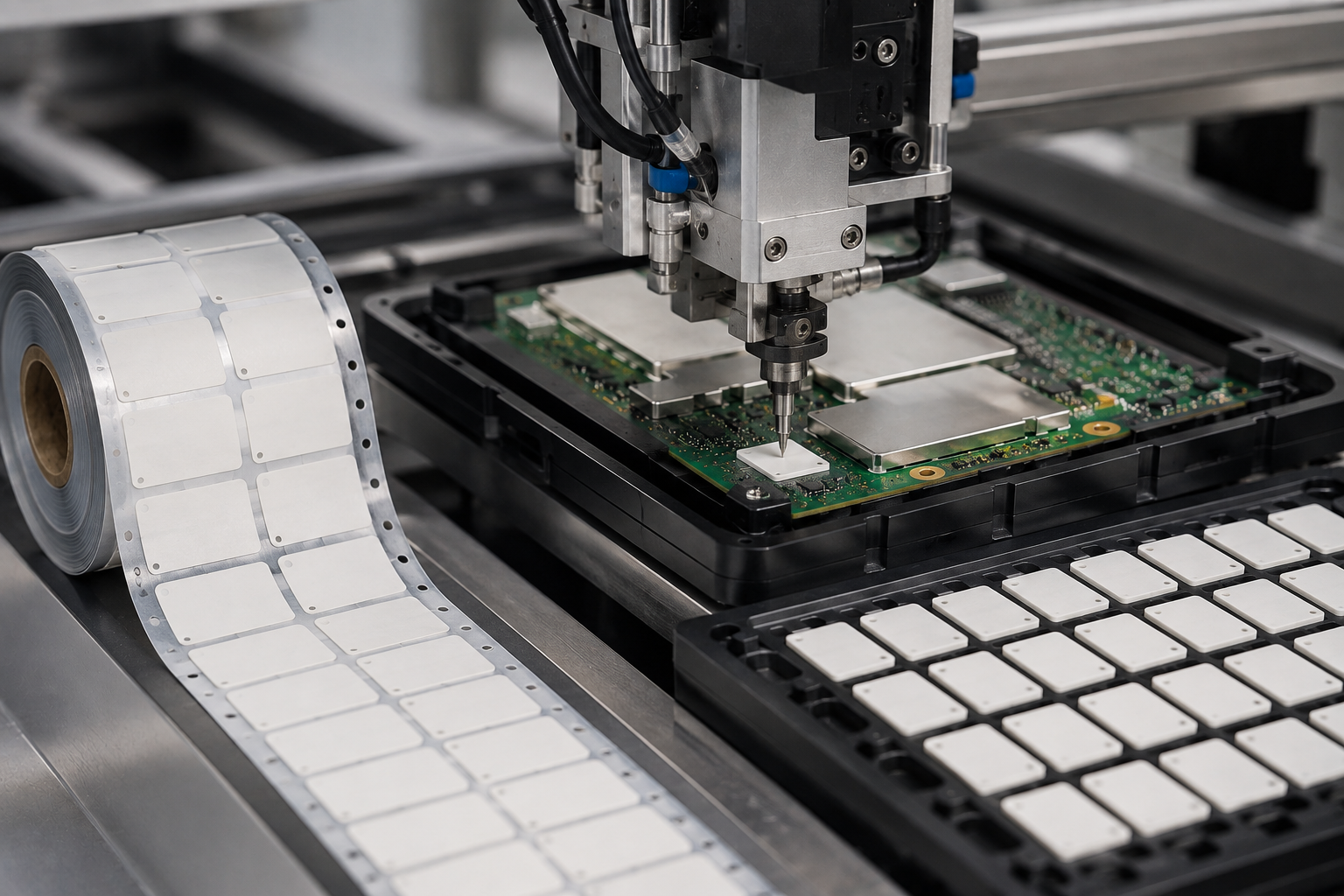
Can Your Adhesive Component Keep Up With Automation?
Automated electronics assembly depends on more than choosing the right adhesive. Learn how liner selection, release force, part spacing, orientation and presentation can help die-cut adhesive components feed, release and place reliably in automated production.
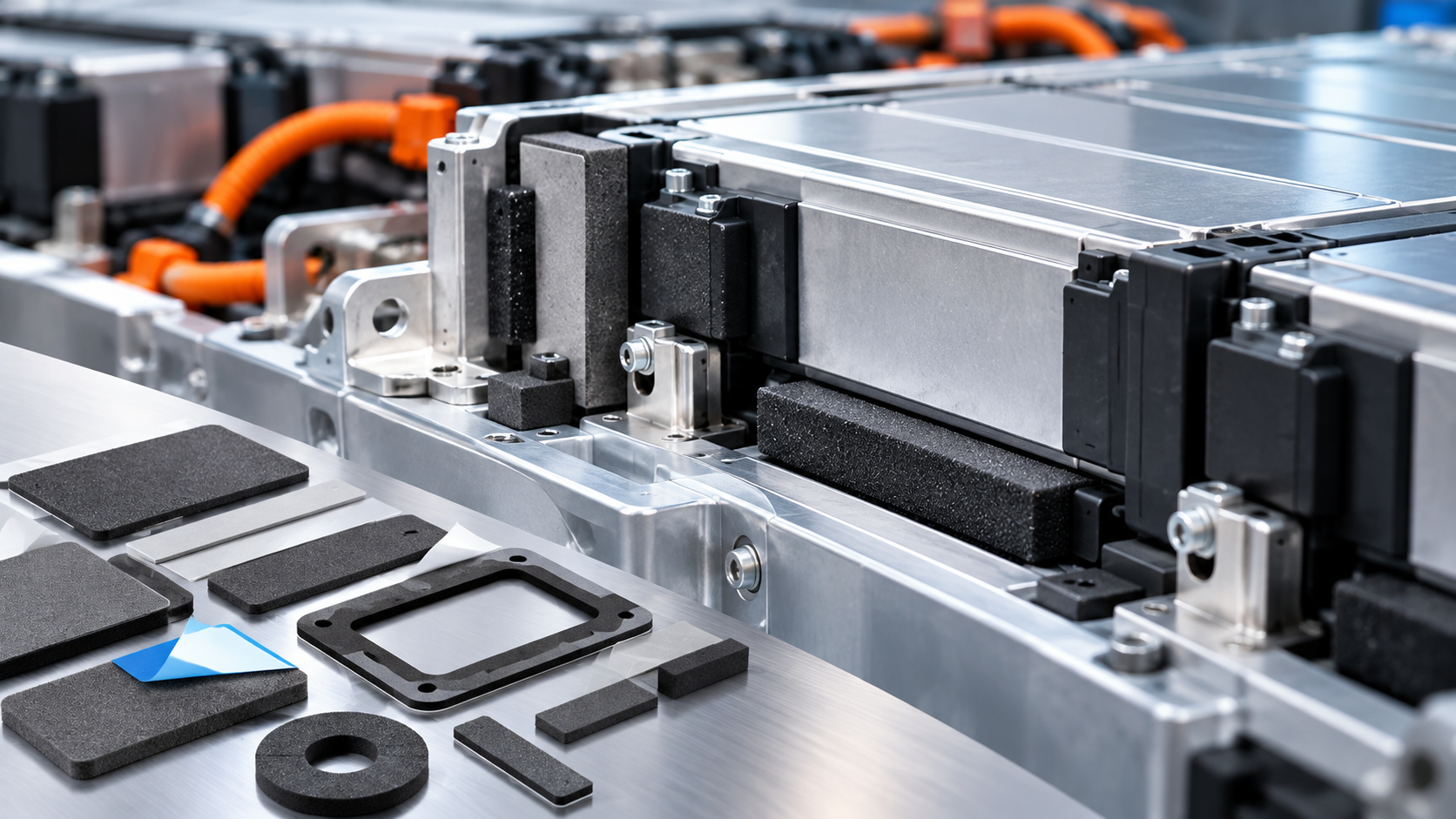
Managing Vibration in EV Battery and Electrical Assemblies
EV battery and electrical assemblies are exposed to constant vibration, movement and shock. Learn how custom-converted foam and adhesive components can help cushion, isolate and protect critical components while supporting more efficient assembly.
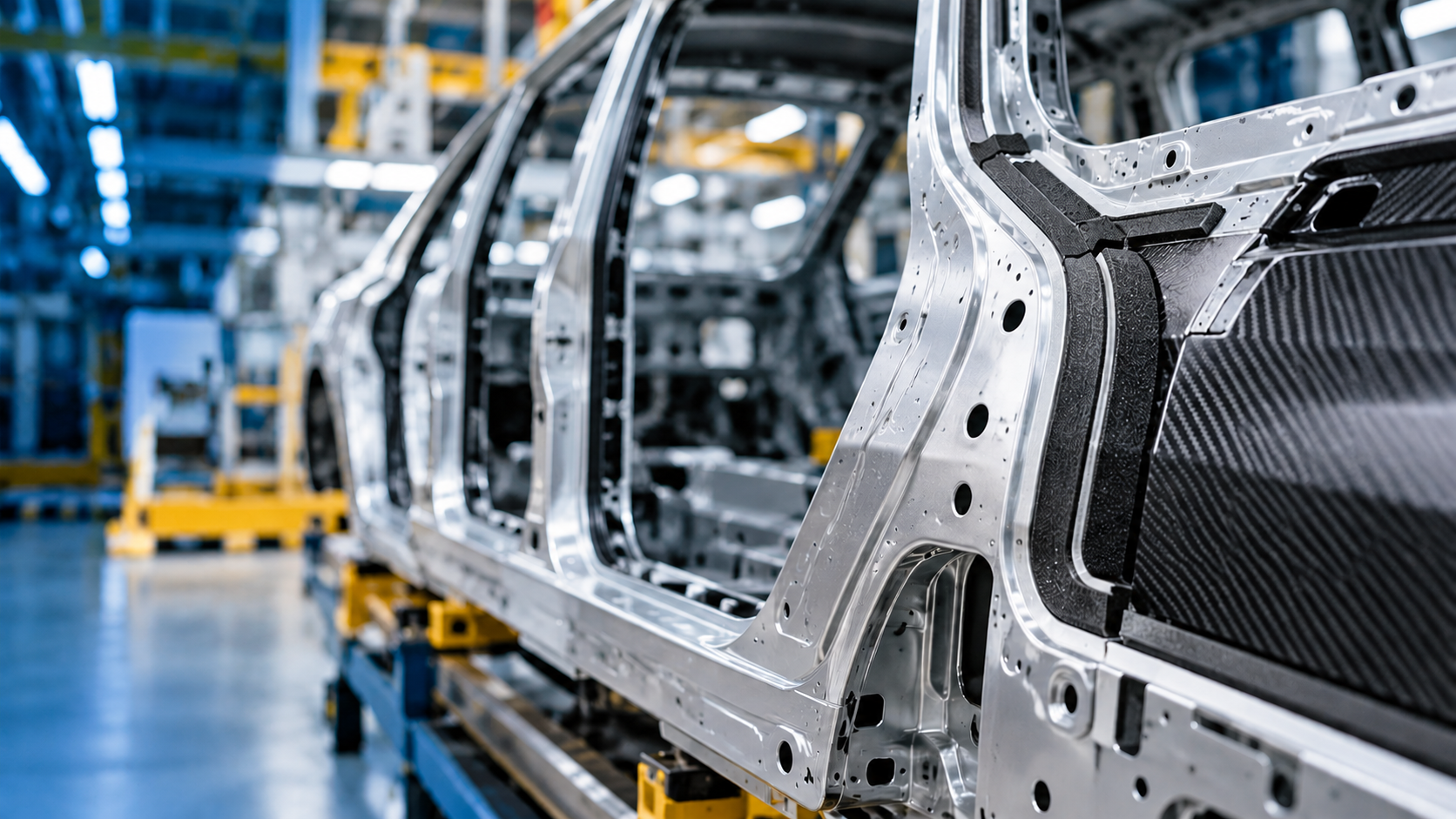
Designing Adhesive Components for More Efficient Medical Device Assembly
Small design choices can have a big impact on medical device assembly. Learn how liner configuration, part orientation, registration and presentation can help improve consistency and production efficiency.
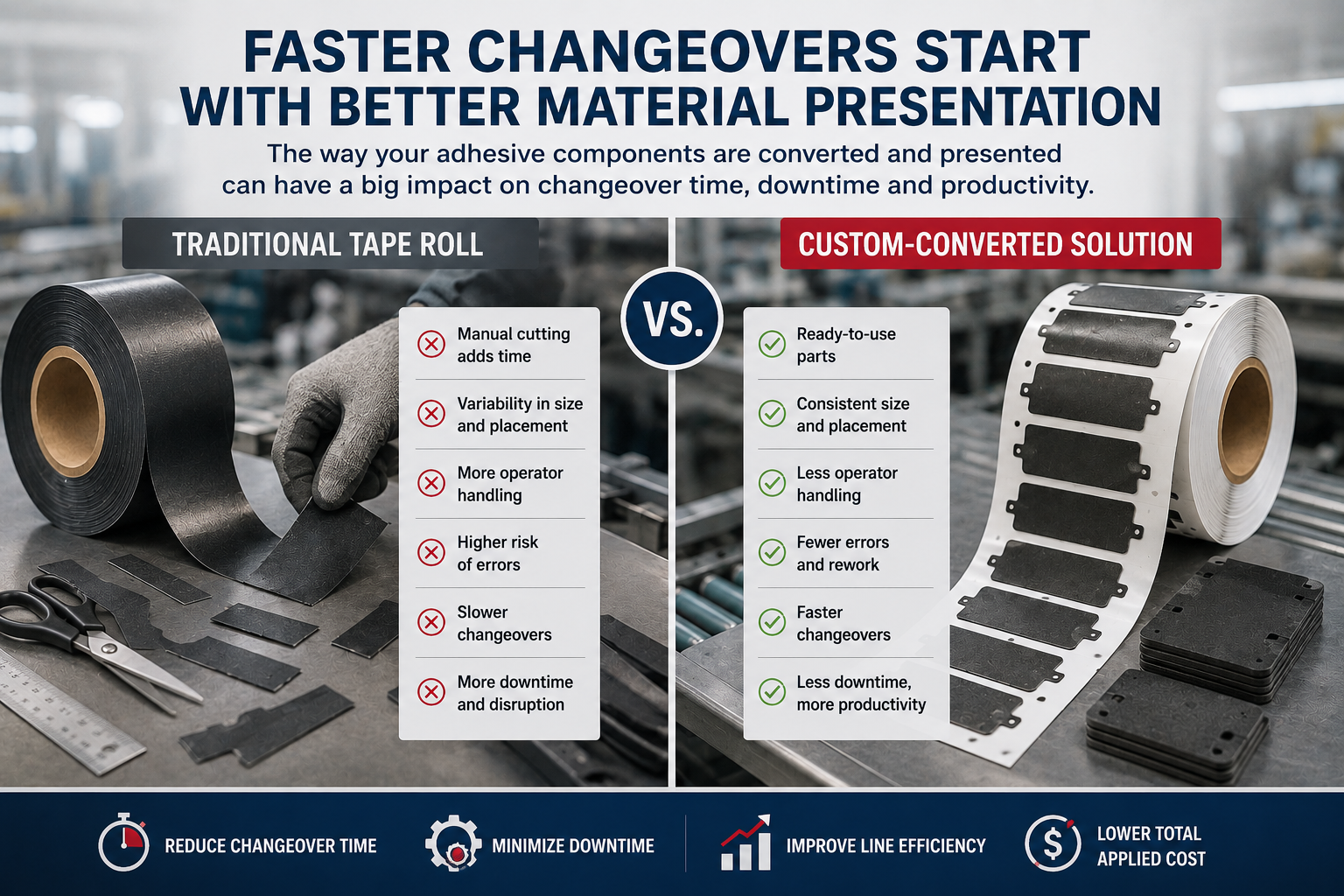
Faster Changeovers Start with Better Material Presentation
Small changes in how adhesive components are converted and presented can have a big impact on production efficiency. Learn how liner design, part spacing, roll configuration and material presentation can help reduce changeover time, downtime and operator handling.
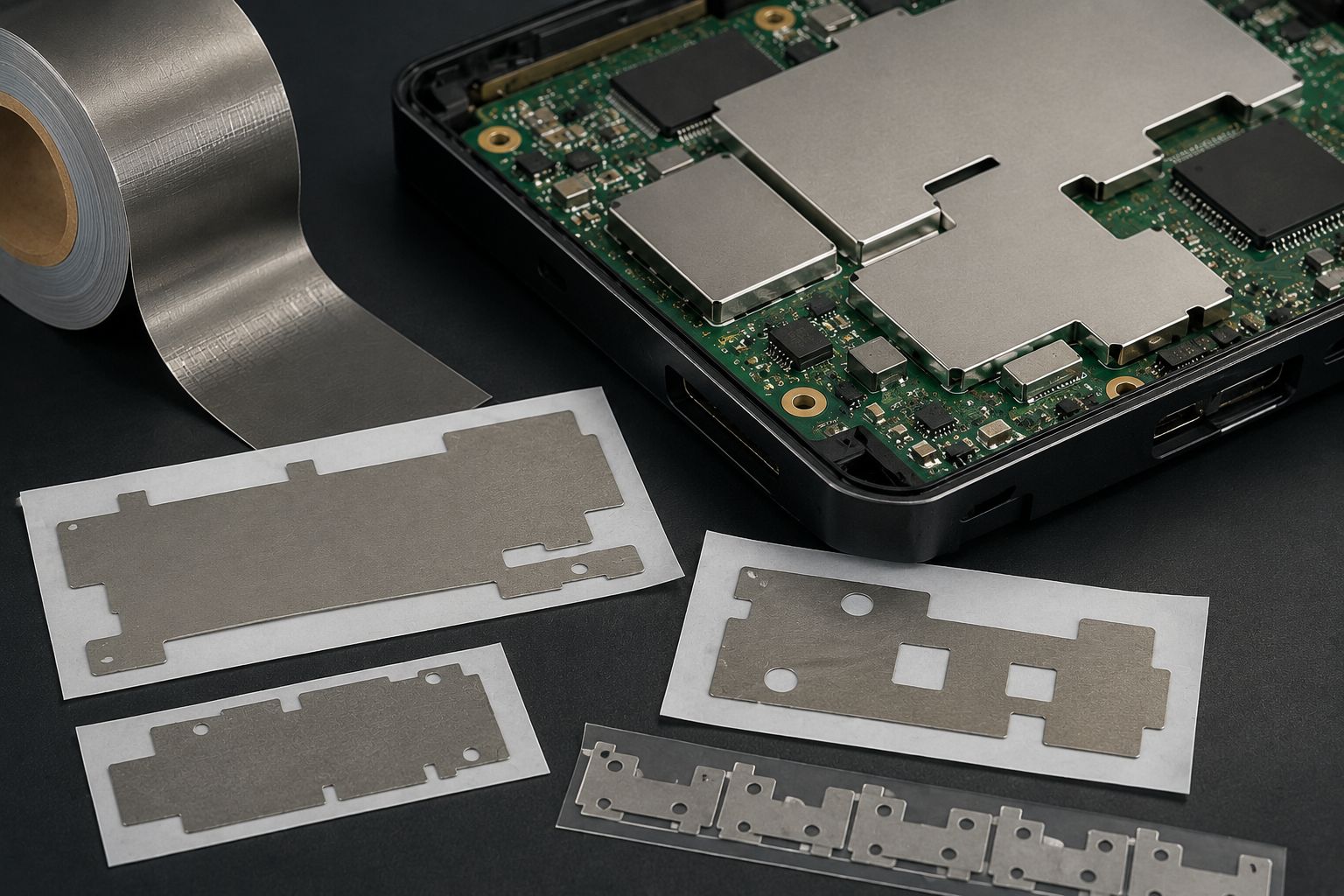
EMI Shielding: When a Die-Cut Component Is Better Than a Roll of Tape
Conductive tapes and foils can provide effective EMI and RFI shielding, but how they are converted and applied matters. Learn when a custom die-cut shielding component can improve placement, repeatability and production efficiency.
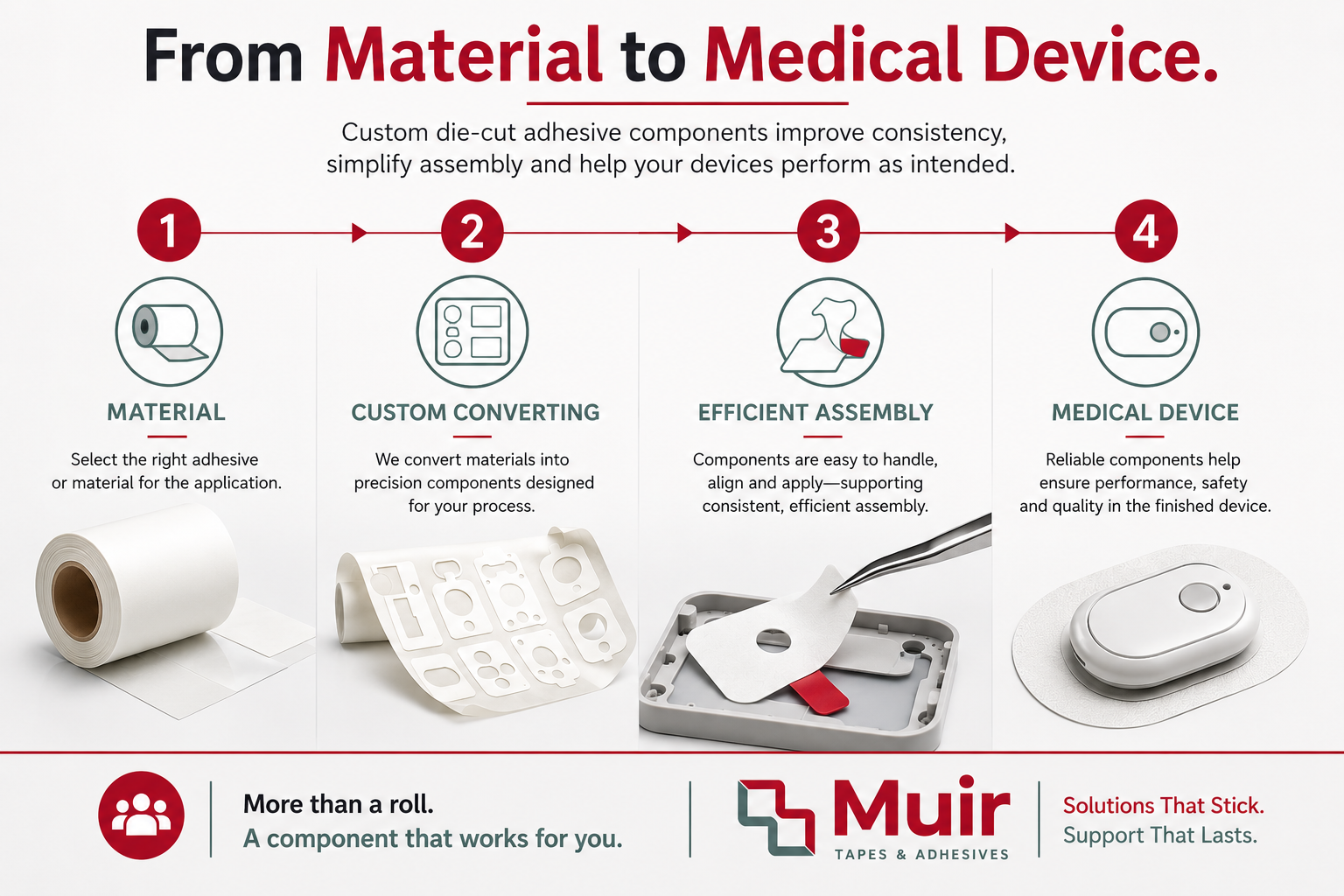
Custom Die-Cut Adhesives for Medical Devices: Moving Beyond the Roll
Custom die-cut adhesive components can simplify medical device assembly, improve consistency and reduce production challenges. Learn when moving beyond roll-format materials can deliver a better manufacturing solution.