
Can Your Adhesive Component Keep Up With Automation?
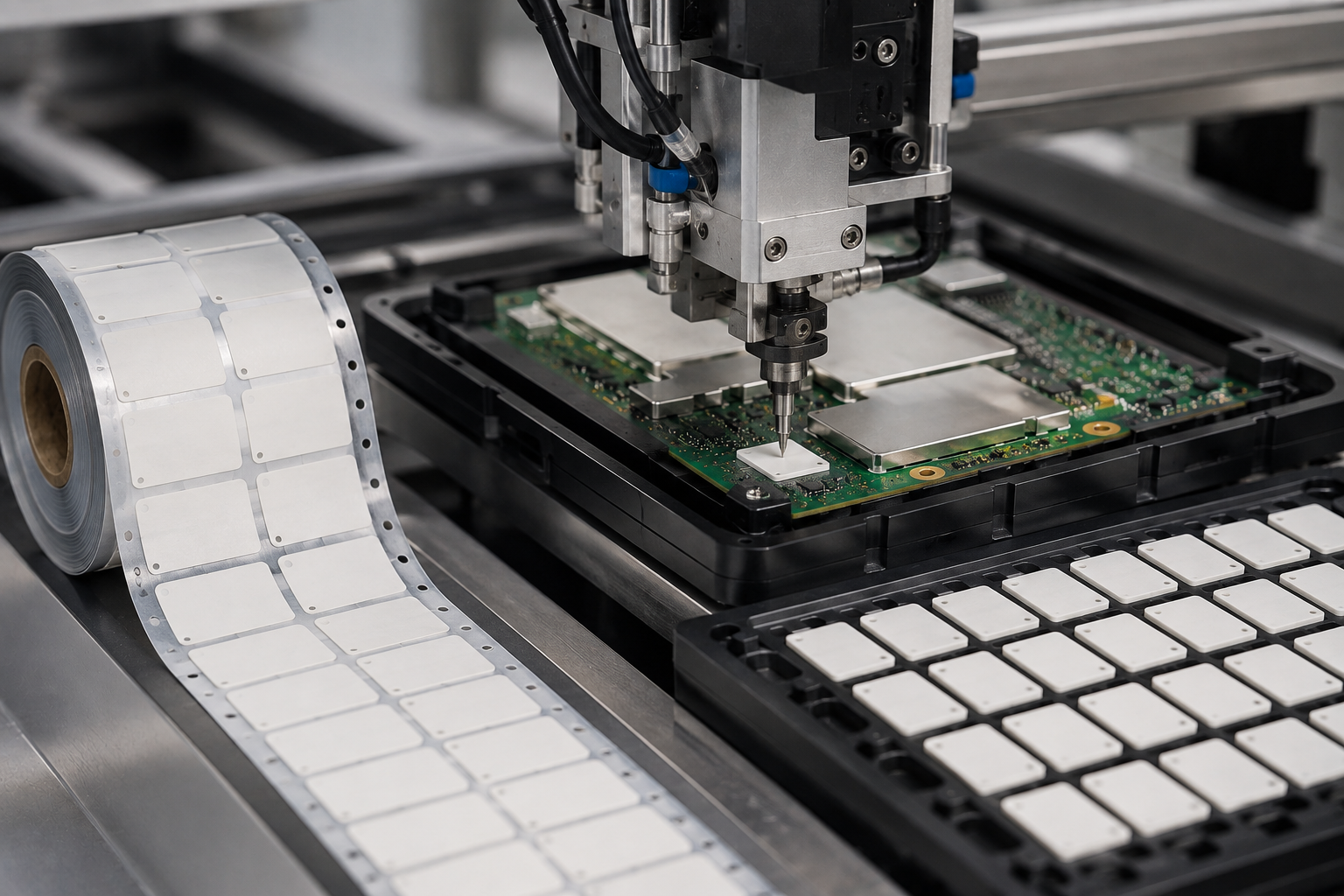
In automated electronics assembly, choosing the right adhesive is only part of the equation.
A die-cut adhesive component may meet every performance and dimensional requirement and still create problems on the production line if it isn’t designed for the equipment that needs to handle it.
Misfeeds. Missed pickups. Inconsistent placement. Parts that release too early, or don’t release at all.
When production is automated, small details in the way an adhesive component is converted and presented can have a significant impact on how reliably the process runs.
Automation Changes the Design Requirements
An adhesive component designed for manual application isn’t necessarily ready for automation.
An operator can often compensate for small variations in orientation, spacing or liner release. Automated equipment generally can’t.
Pick-and-place and other automated application processes depend on consistency. That means factors such as part spacing, orientation, registration, liner stability and presentation format need to be considered alongside the adhesive itself.
The earlier these requirements are understood, the easier it is to design a component that works with the production process rather than against it.
The Liner Does More Than Protect the Adhesive
In an automated process, the release liner becomes part of the delivery system.
It needs to remain stable as it moves through the equipment while allowing each component to release predictably at the right point in the process.
If the liner stretches, curls or tracks inconsistently, part positioning can be affected. If release force is too high, automated equipment may struggle to remove the component. If it is too low, components may shift or release prematurely.
Selecting the right liner and release characteristics can therefore be just as important as determining the shape of the converted part.
Spacing, Orientation and Presentation Matter
Automation relies on repeatability.
The pitch between components needs to remain consistent. Parts need to arrive in the expected orientation. Registration needs to be controlled so the equipment knows where each component will be.
Presentation matters too.
Depending on the application and equipment, converted adhesive components may need to be supplied in a particular roll configuration, sheet layout or other format that supports reliable feeding and placement.
These decisions can seem minor when looking at an individual component. Across thousands - or millions - of placements, they can make the difference between a process that runs consistently and one interrupted by errors and adjustments.
Design the Component Around the Process
This is where precision converting becomes more than simply cutting adhesive material to a specified shape.
Understanding how the component will move through the production process creates opportunities to address potential problems before they reach the line.
That may mean adjusting part spacing, evaluating liner options, controlling release characteristics, changing orientation or determining a presentation format better suited to the application equipment.
For engineers, considering these factors early can help reduce redesign and production troubleshooting.
For purchasing and operations teams, a component designed for reliable automation can help reduce the hidden costs associated with scrap, rework, line interruptions and inconsistent assembly.
A Better Component Is One the Equipment Can Use Reliably
As electronics manufacturing becomes increasingly automated, adhesive component design needs to consider more than what happens after the part is installed.
It also needs to consider everything that happens on the way there.
At Muir Tapes & Adhesives, we work with manufacturers to develop custom-converted adhesive components with both application performance and production requirements in mind.
Because the right adhesive component shouldn’t just bond properly.
It should feed, release and place reliably too.
Planning a new automated electronics assembly process - or troubleshooting an existing one? Talk to the Muir team about die-cut adhesive components, liner selection, spacing, release characteristics and presentation formats designed around your production process.