
Thermal Interface Materials: Why Thickness and Compression Matter
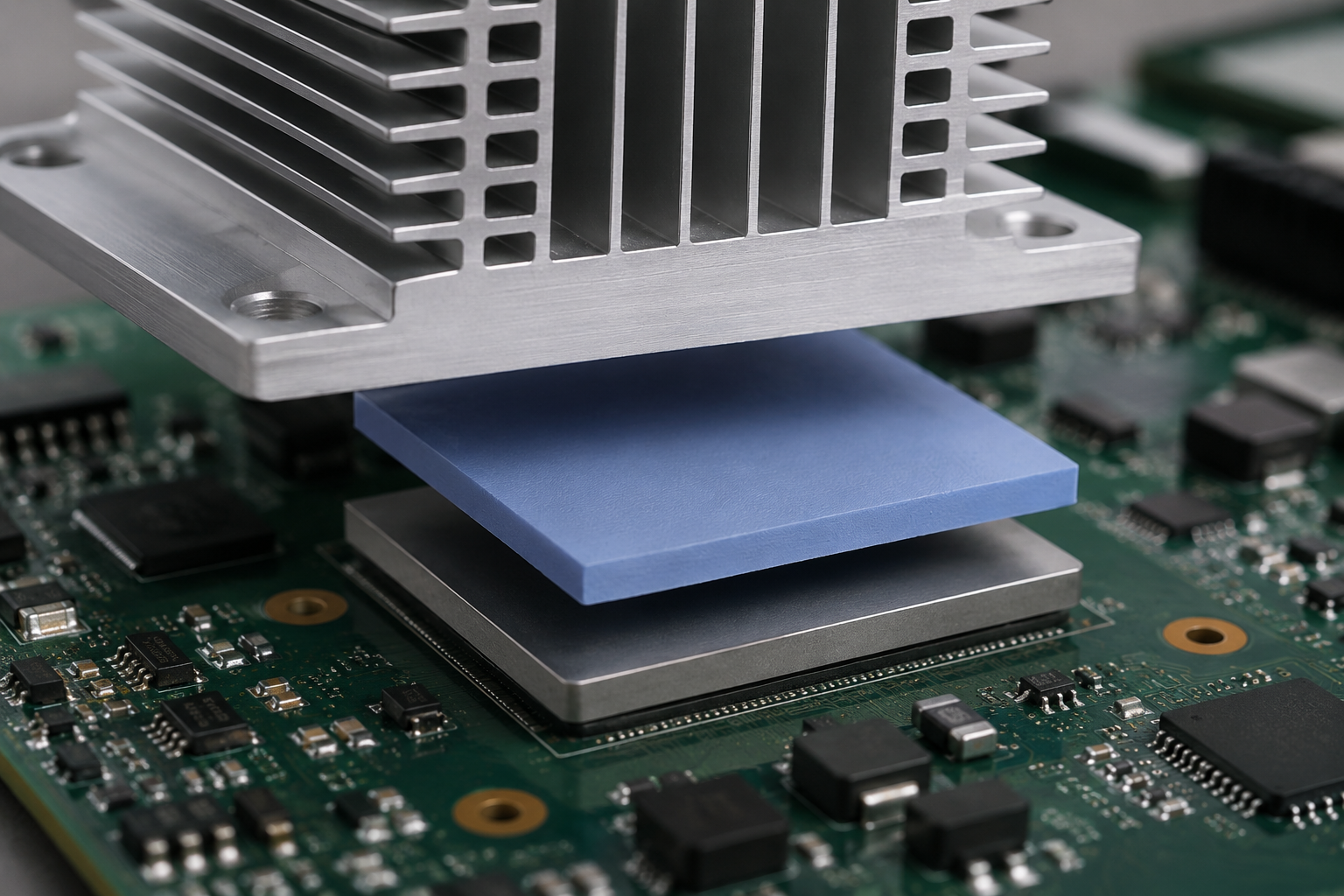
When selecting a thermal interface material, thermal conductivity often gets most of the attention. But in real-world electronics thermal management, conductivity is only part of the equation.
Thickness, compression, and conformability can have a major impact on how effectively heat moves between components.
Thickness Is About More Than Filling a Gap
Thermal interface materials are commonly used to bridge the gaps between heat-generating components and heat sinks, housings, or cooling plates.
If the material is too thin, it may not fully contact both surfaces. If it is too thick, it can introduce unnecessary thermal resistance or create mechanical stress within the assembly.
The correct thickness should account for:
Actual gap dimensions
Surface flatness
Component tolerances
Assembly variation
This is why tolerance stack-up should be considered early in the design process.
Compression Affects Contact
Many thermal pads are designed to compress during assembly. That compression helps the material conform to surface irregularities and improve contact between mating surfaces.
However, too little compression can leave air gaps, while excessive compression may place unwanted force on sensitive electronic components.
The goal is to achieve reliable surface contact without creating unnecessary mechanical stress.
Converting Can Improve the Final Design
Die-cut thermal pads can be produced to match specific component shapes, openings, mounting locations, and assembly requirements.
Precision converting can also help control part dimensions and presentation, making thermal interface materials easier to install manually or integrate into automated manufacturing processes.
For engineers, this means evaluating the thermal material as part of the complete assembly, not simply choosing the highest conductivity value.
For purchasing teams, it means looking beyond material cost and considering fit, installation consistency, scrap, and overall production efficiency.
The best thermal management solution is one that performs thermally, fits mechanically, and works reliably within the manufacturing process.
Working on an electronics thermal management application? Contact our team to discuss gap requirements, compression, material selection, and custom die-cut thermal pads. We can help develop a converted solution suited to both your design and production process.