
EMI Shielding: When a Die-Cut Component Is Better Than a Roll of Tape
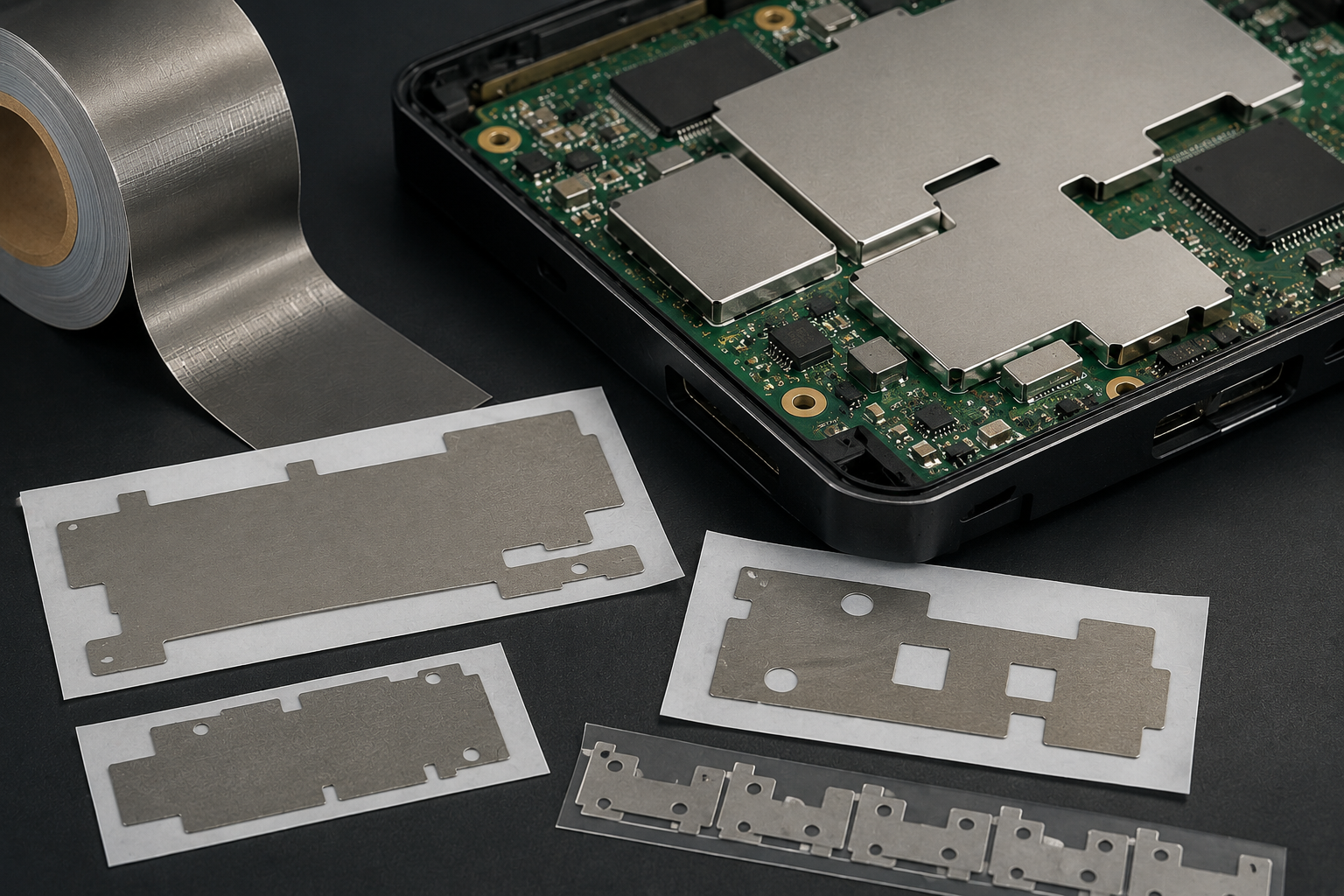
EMI and RFI shielding is an important consideration in many electronic assemblies, especially as devices become smaller, faster, and more densely packed.
Conductive tapes and foils can be effective shielding materials, but the way they are applied can have a significant impact on consistency and performance.
Using tape directly from a roll may work well for prototypes, repairs, or low-volume production. However, manual cutting and placement can introduce variation in:
Part size
Coverage area
Alignment
Edge overlap
Grounding contact
In higher-volume manufacturing, those small differences can affect both assembly efficiency and repeatability.
Why Consider a Die-Cut Shielding Component?
A custom die-cut component can be manufactured to match the exact geometry of the application. Openings, tabs, contact points, and complex shapes can be incorporated directly into the part.
This can help reduce manual trimming and make placement more repeatable.
Die-cut conductive tapes and foils can also be supplied on sheets, rolls, or liners designed around the assembly process.
For engineers, this means the shielding component can be considered as part of the design rather than added as a secondary operation.
For purchasing teams, the comparison should go beyond the price of a roll of tape. Labour, scrap, rework, placement consistency, and production time all contribute to the true applied cost.
The goal is not simply to add conductive material. It is to create a shielding solution that fits the assembly, makes reliable contact, and can be applied consistently.
Working on an EMI or RFI shielding application? Contact our team to discuss conductive tapes, foils, part geometry, and custom die-cut solutions designed around your electronics assembly process.