
Selecting Adhesives for Medical Device Assembly
What should manufacturers consider when selecting adhesives for medical device assembly?
The right adhesive depends on the materials being bonded, the device design, the production process and the conditions the finished component will face.
Adhesives may be used to attach housings, secure foam or film components, mount labels, create seals or replace certain mechanical fasteners. But choosing a material based only on initial bond strength can lead to problems later.
Start With the Surfaces
Medical device assemblies may include plastics, metals, foams, films, fabrics, glass or coated materials.
Each surface behaves differently. Some plastics have low surface energy, making them more difficult to bond. Coatings, oils, release agents and contamination can also affect adhesive performance.
Both surfaces must be considered, along with any cleaning or surface-preparation process used before assembly.
Define the Application Requirements
Manufacturers should identify the conditions the adhesive will experience during production and use.
Depending on the application, this may include:
Peel, shear or tension
Flexing or vibration
Moisture and humidity
Temperature changes
Cleaning agents or chemicals
Sterilization processes
Storage and transportation
The term “medical-grade adhesive” does not automatically mean a material is suitable for every medical device. Suitability depends on the complete application, intended use and applicable quality or regulatory requirements.
Final material selection should always be confirmed through application-specific testing and validation.
Consider How the Part Will Be Applied
A suitable adhesive can still create production challenges if it is difficult to handle or position.
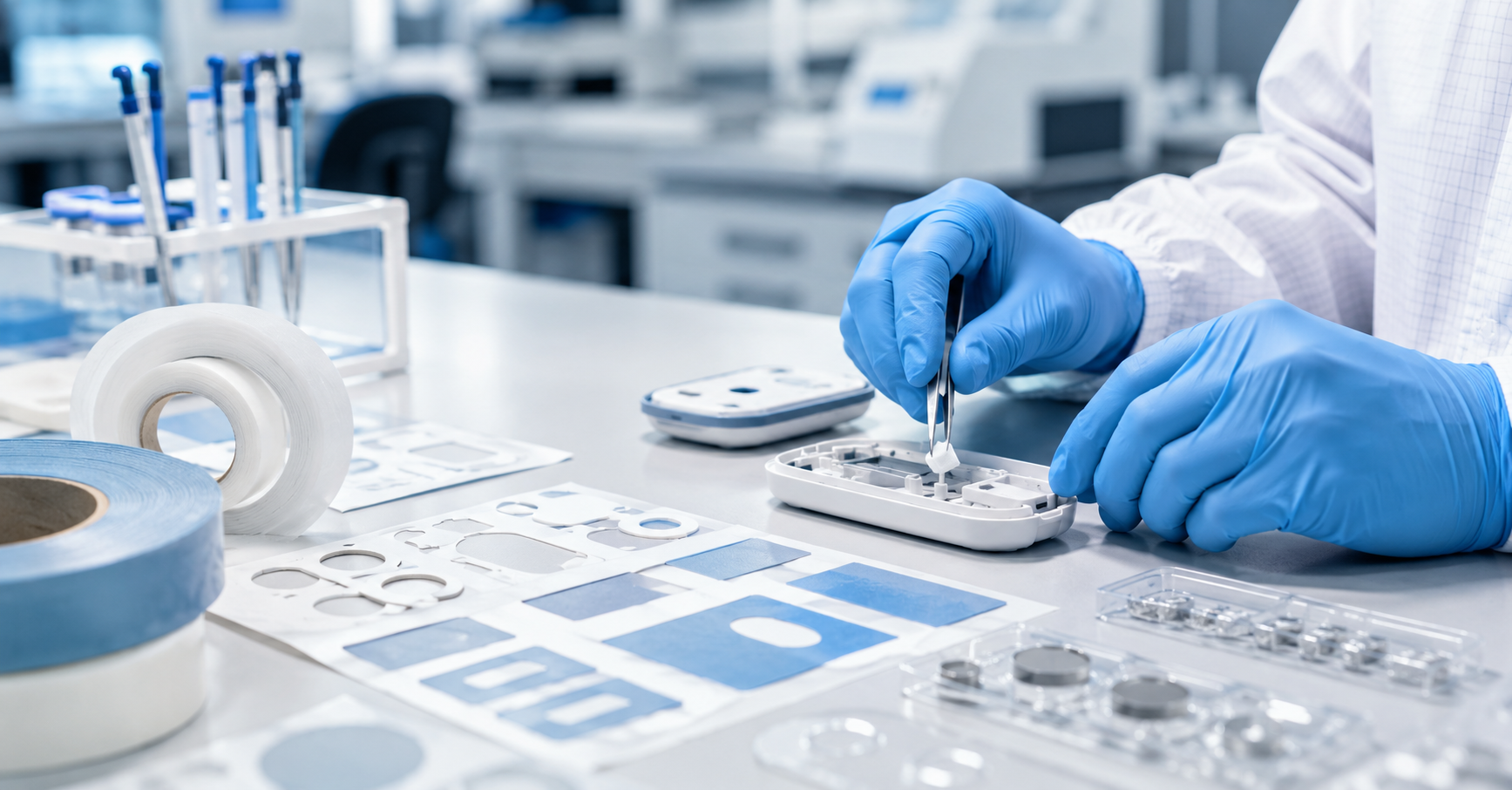
Custom converting can transform adhesive materials into production-ready components such as:
Die-cut shapes
Kiss-cut parts
Controlled dimensions
Finger-lift tabs
Split or segmented liners
Sheets, rolls or individual parts
Custom kits or packaging
These formats can help reduce production-floor trimming, simplify installation and support more consistent placement from part to part.
Identify Production Requirements Early
Medical device projects may also require specific documentation, traceability, packaging, inspection or controlled manufacturing conditions.
These requirements can affect the material, converting method, production location and overall cost. Identifying them early helps prevent redesigns later in the development process.
Muir Tapes & Adhesives works with manufacturers to source and convert tapes, adhesives, foams, films and related materials into application-specific components.
Where specialized certifications or controlled production conditions are required, MTA can evaluate qualified production options based on the needs of the project.
Discuss Your Application
Involving an adhesive converter early can help align the material, part design, liner and application method with the production process.
Contact Muir Tapes & Adhesives to discuss your medical device assembly application and explore a custom-converted tape or adhesive solution.